







Starholes is a fast action touchscreen game requiring strategy and skill.
Game Geeks News are proud to bring you another amazing project currently running on Kickstarter. David Mortimer currently works as a games developer. He produces Android apps and games using Java/LibGDX/AndroidStudio. Davids latest project, Starholes is a family game that is great to play and is perfect for those times when you have a few minutes to kill.
The gameplay is unique and easy to learn. Starholes is not a repetitive screen-tapping game which takes you through an endless obstacle course until you get killed and end up back at the beginning. It is a lot more interesting than that!
The Starholes gameplay has not been built with a software builder program such as Unity. The gameplay is based on Davids own mathematical modelling which would accommodate many different scenarios. For example, instead of space defenders and raiders, we could have cats and mice, cops and robbers, tanks and drones, farmers and rabbits – you could probably think up a few scenarios yourself!.
Starholes has been fully tested and scanned by Google, and is now available as a free download from Google Play.
David asking for your support in order to bring this project to life. In return, they’ve created some cool rewards to make you feel part of the project.
How to Play Starholes:
Key to the symbols:
Missiles (white squares) and raiders (red squares) travel in straight lines from star to star, but not across the blue rectangles. Missiles are launched by tapping the blue ‘FIRE’ button.
Blue rectangles = energy banks which cannot be traversed by missiles or raiders.
Yellow circles = star systems (i.e. solar systems). Red raiders pop out from the yellow circles at random.
White squares = missiles.
White lines = missile path. You plot missile paths by tapping on stars. Missile paths can be as long as you like, but remember, you can’t traverse the blue rectangles. When you tap on the blue ‘FIRE’ button to launch a missile, your missile travels along the path. Once a missile has been launched on its path, you may delete that path by tapping on the first white node from which the missile was launched. You may then start plotting another path for the next missile straight away while the missile you launched previously continues on its path. So, you do not need to wait for a missile to complete its journey before starting to plot a new missile path.
White circles = nodes on a missile path. When a node is tapped, the missile path is shortened to that node. So if you want to delete the entire current missile path, then just tap the first node.
Blue button = used to fire missiles.
Red squares = raiders. Raiders leech energy from your star sector. When a raider first appears, it will start to travel along a random path of stars and steal energy units from each star on its journey path. Therefore, a good strategy might be to try killing raiders before they reach their first star.
Google’s rigorous testing of Starholes is now complete and can be downloaded from the Google Play Store here.
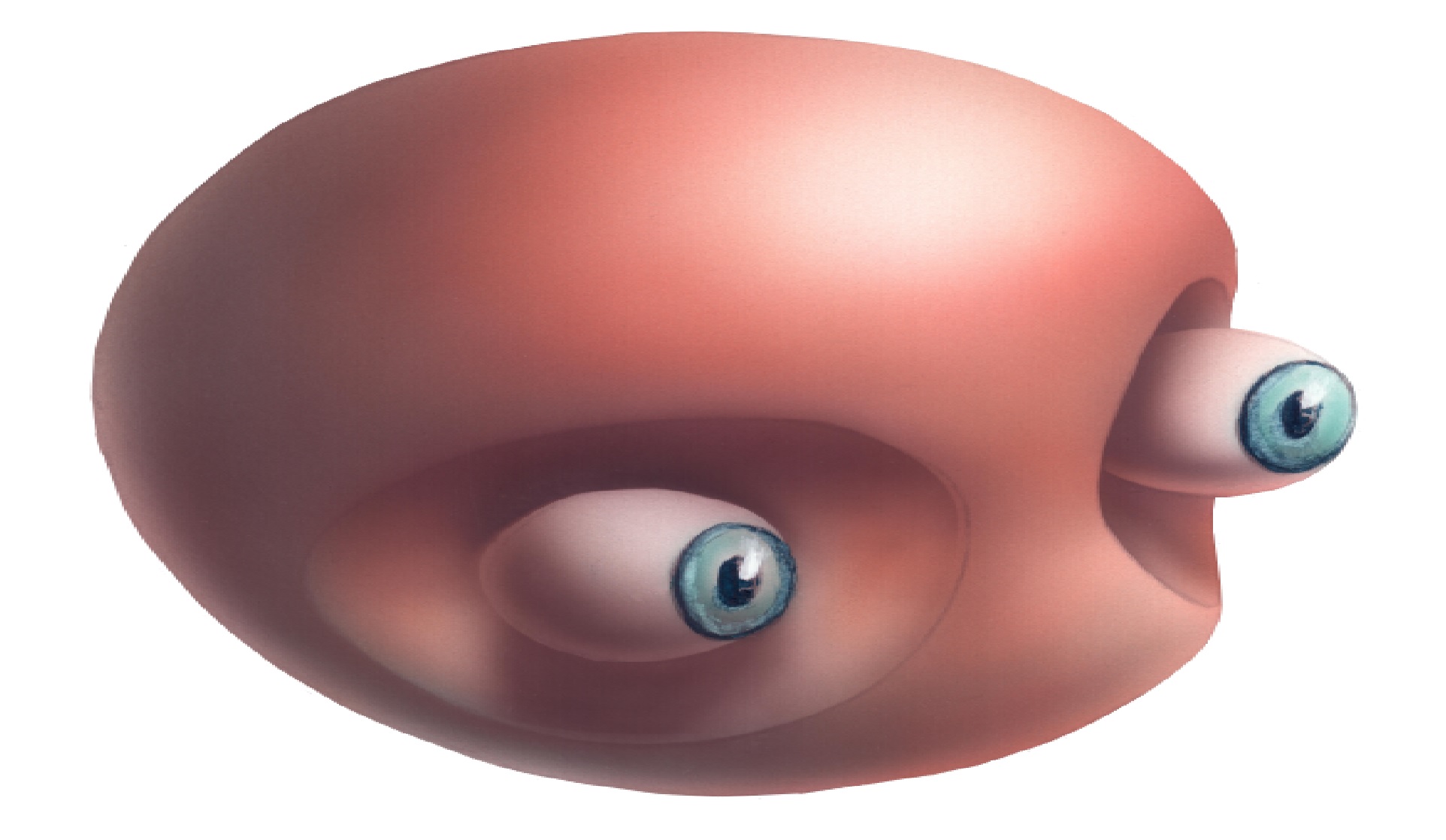
The artworks for Starholes involve absolutely no digital manipulation programs (such as PhotoShop). These beautiful artworks have been created using nothing but traditional media; airbrush, gouache, watercolour, oils, graphite, etc., on substrates such as illustration board and stretched paper.
This means they possess the original, one-off, physical paintings and drawings (unlike digital artworks which cannot be guaranteed to have originals because they are computer files, and thus can be copied exactly).
David would like to create lots more original artworks and make some of them available to their supporters in return for their kind support.
The scope of Starholes:
Like Star Trek, there is no single location for Starholes. At any particular time, we could be in any part of the universe. Their stories and artworks would be limited only by our imaginations. Our dreams, fantasies, etc. could all be played out within the scope of a simulation like Starholes.
Having said that, there are some fundamental science fiction concepts which underpin Starholes.
The setting:
The year is 424242. Instantaneous transportation between star systems has long been possible by creating wormholes.
Star systems use wormholes to send raiders to other star systems in order to steal their energy. Some star systems have begun to form alliances to strengthen their defences. These alliances are called star sectors.
The Starholes simulation:
The Starholes game screen simulates a star sector. The sector is made up of an alliance of sixteen star systems (currently represented by the yellow squares).
Our star sector currently has just one defender, but we will soon need to employ more as the number of raids from other star sectors increases.
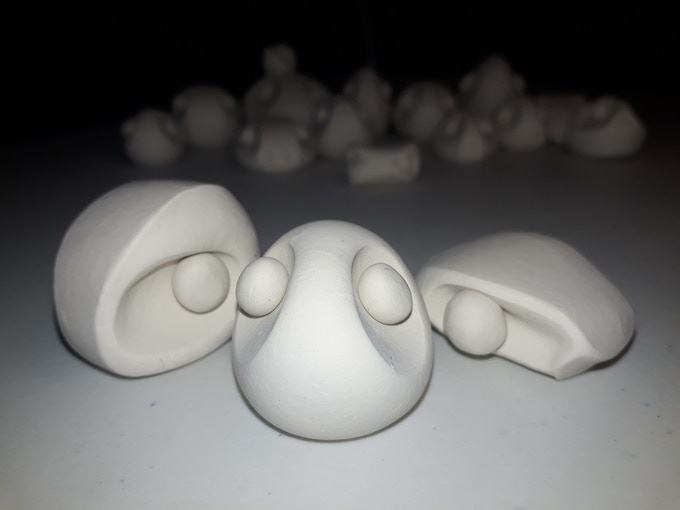
Defenderbot Flanked By Two Raiderbots
No digital manipulation. Plasticine sculptures. Character concepts for our video game Starholes. Airbrush images will be created from these models.
Some science fiction theory:
The fundamental fabric of space consists of tiny sub-atomic cells. These cells can be visualized as infinitesimally small ‘3D pixels’ on an infinite ‘3D monitor’.
We know that a pixel on a computer display can appear to be moving, but this is just an illusion. What really happens is that a succession of contiguous pixels change state. At the very same moment, as one pixel changes state, the next pixel changes state.
Similarly, a simple wormhole can be visualized as a single 3D pixel that has been stretched out to become contiguous with another 3D pixel somewhere else in the universe. Multi-pixel wormholes can be created by taking a cluster of neighboring 3D pixels in one star sector, and stretching them out to another star sector.
One of the great things about Starholes is that the gameplay is very different to that of most other games, but it is very easy for anyone to learn.
Gamers are crying out for something different. Starholes is not only a highly entertaining game in its own right, but it also provides a sound basis for a whole new gaming paradigm!.
David needs to incorporate more stunning artwork to bring our project alive. We also need to develop many more program features into the software and backing this kickstarter can help David achieve his goal. There are also some amazing rewards available for backing this campaign which includes having your name in the credits of the final version of the game, membership to ukgamecoder, and framed artwork from the Starholes. For more information please visit their kickstarter page here.
Risks and challenges:
Some coding tasks may take a little longer than expected. However, this is usually balanced by the early completion of other tasks, which means that coding projects are almost always completed before the deadline.
David is always very conscious of what is expected of him and will always keep you fully informed with regular progress reports, and any queries will be answered swiftly.
Other risks include factors which may affect any project: delays for external resources, prolonged power cuts, acts of God, etc..
In order to minimize the risk of not meeting the deadline, David has allowed ample contingency time. Therefore, the project would almost certainly be completed before the deadline. Any remaining contingency time would be used to add further functionality and artwork.