











Call of Duty faces its first real decline under Microsoft.
Bottom line: Amid Microsoft’s ambition to turn Game Pass into gaming’s dominant business model, one of its most valuable assets is showing signs of strain. Call of Duty, a $35 billion global franchise known for annual billion-dollar releases, appears to be in decline less than two years after Microsoft completed its acquisition of Activision Blizzard.
While Microsoft has not publicly disclosed performance figures for Call of Duty: Black Ops 7, court filings from former Activision Blizzard CEO Bobby Kotick paint a far less flattering picture. In documents submitted as part of the ongoing class-action lawsuit Sjunde Ap-Fonden v. Activision Blizzard et al., Kotick claims that franchise sales in 2025 fell 60 percent year over year. The assertion stands in stark contrast to Microsoft’s public celebration of Black Ops 6 as “the biggest Call of Duty release ever.”
Kotick attributes the downturn to a combination of intensified competition and shifting consumption habits driven by Microsoft’s decision to integrate Call of Duty into Game Pass. The subscription service, which gives users day-one access to new releases for a recurring monthly fee, is widely viewed as a disruptive force across the gaming industry.
From previous story (Dec): Black Ops 7 markedly underperforms as sales and player count tumble
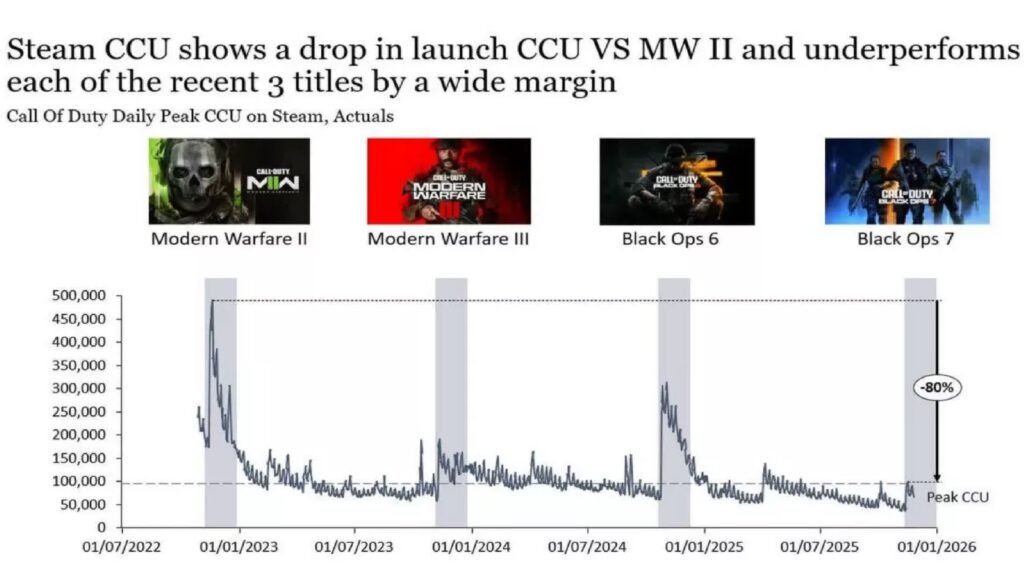
Players accustomed to paying $15 per month are far less likely to purchase a $70 title outright, a dynamic that may be eroding Call of Duty’s retail sales even as its overall player base remains large.
Sony’s data provides a rare external benchmark outside Microsoft’s opaque financial reporting. On the PlayStation Store, Black Ops 7 failed to rank among the five most-downloaded games of 2025, breaking a decade-long streak in which the franchise reliably topped annual charts. For a brand that once defined premium console sales, the absence from the top tier is notable.
Microsoft’s broader acquisition strategy has aimed to shift the company from product-first to service-first economics, using flagship franchises like Call of Duty to anchor subscription growth. The company has described this approach as a “conversion model,” prioritizing long-term engagement and retention over one-time purchase revenue.
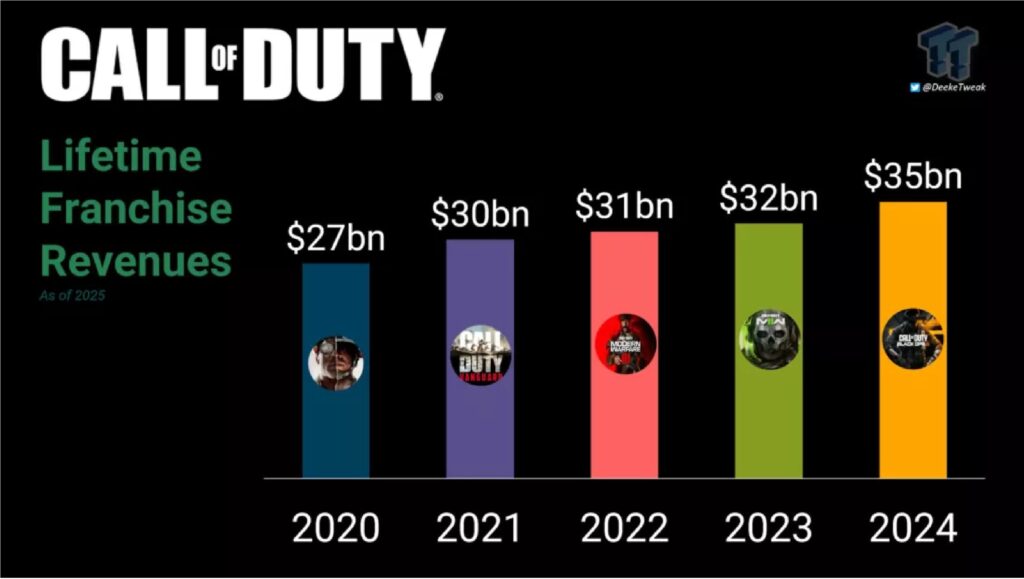
As Kotick’s filing notes, this transformation is unfolding amid what he describes as “intense competition from titles like Battlefield,” challenging the Federal Trade Commission’s earlier assertion that Call of Duty lacked meaningful rivals in the first-person shooter market.
For Activision Blizzard, which stopped publishing detailed performance metrics after the merger, the full implications remain difficult to assess. Kotick adds that the company’s actual operating results for 2024 and 2025 fell well below internal forecasts, although he acknowledges that similar shortfalls occurred during his own tenure.
Still, the apparent link between declining sales and Microsoft’s Game Pass rollout underscores a central question facing the company’s gaming strategy: can subscription revenue reliably replace blockbuster, upfront sales? For now, Call of Duty’s trajectory suggests that even the most powerful brand in interactive entertainment is not immune to the shifting economics of digital distribution.

Game Geeks News has affiliate partnerships. These do not influence editorial content. Game Geeks News may earn a small percentage of commission for products purchased via affiliate links.
By Skye Jacobs 18 January 2026